Class Ii Division 1 Hazardous Location
Since the changes to the code hazardous locations with gases or vapors Class I present can be reclassified as Zone 0 1 or 2. Locations that would be considered to be Class II include Grain elevators Flour and feed mills Metal powder manufacturers and Coal plants etc.
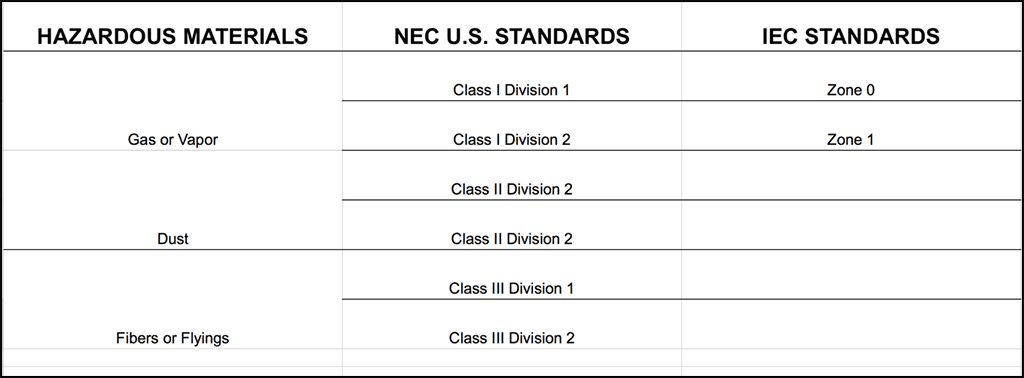
Hazardous Locations Groups Classes And Divisions Valveman Com
Simply put this requires proper handling and storage of the flammable gases vapors or liquids to prevent such an ignition under normal operating conditions.
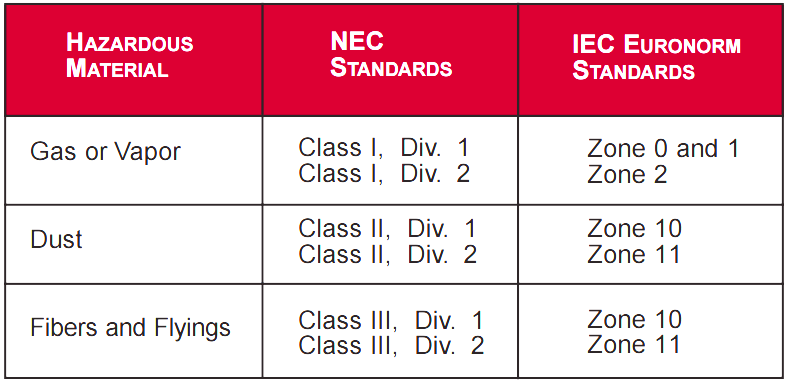
Class ii division 1 hazardous location. When comparing Divisions and Zones Division 2 is equivalent to Zone 2 but Division 1 is equivalent to either Zone 0 or 1. Class II locations are those in which combustible dust may be found. Note that the dust must be present in sufficient.
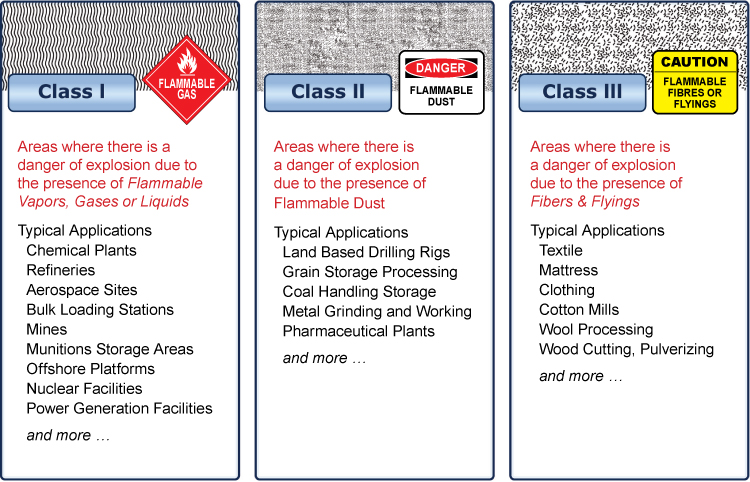
Class 1 Hazardous Locations refer to facilities which deal with flammable gases vapors and liquids. Adjacent to a Class I Division 1 location where ignitable concentrations might be occasionally communicated. The area is classified in accordance.
Provides follow-up inspections at the location of manufacture. There are a number of hazards to be considered when using electrical equipment in areas where flammable combustible or explosive elements do or might exist. Hazardous classified locations may be found in occupancies such as but not limited to the following.
Example - Hazardous Area Classification. A Class II Division 1 location is an. The key difference between Divisions and Zones relate to terminations.
Division 2 specifies that these flammable materials are handled processed or used in the defined hazardous location but are not normally present in concentrations high enough to be ignitable. For definitions of these locations see 1926449. Class I Division 1 Class I Division 2 Class II Division 1 Class II Division 2 Class III Division 1 Class III Division 2.
Group II is for explosive gases Zone 0 1 and 2 and Group III is for explosive dusts Zone 20 21 and 22. C Identification of a Class II Location. Figure 5007 1 Class II Division 1 Location.
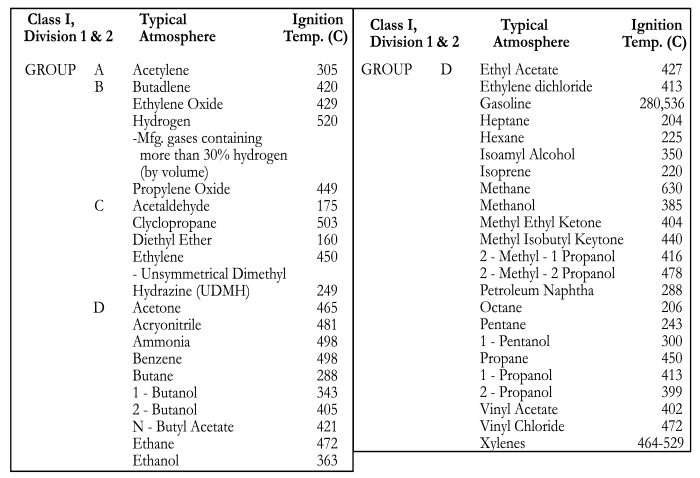
Class I Div 1 Groups A B C and D Explained. The NEC Hazardous Location Option Defined Class 1 Hazardous Locations refer to facilities which deal with flammable gases vapors and liquids. Equipment approved for use in Class I hazardous locations cannot be used in Class II hazardous locations.
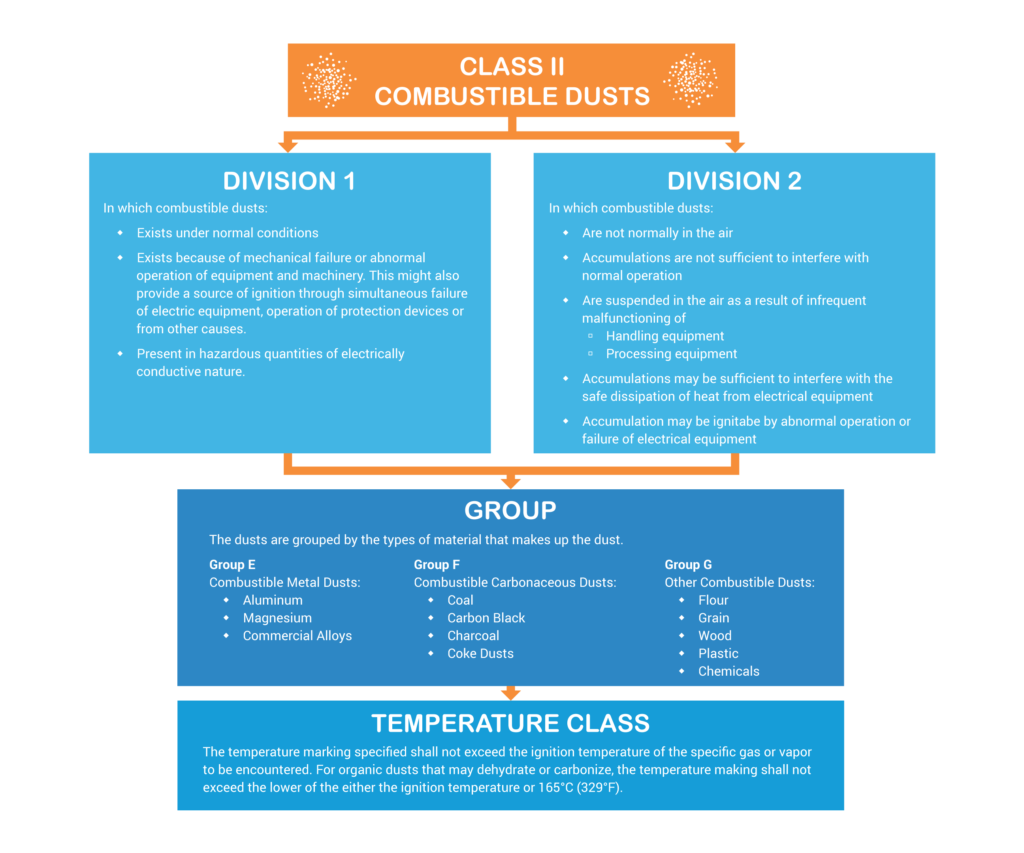
Class II locations are those where the presence of combustible dust may be suspended in the air or accumulates on electrical equipment in quantities sufficient to ignite or explode. Group is divided in three groups where Group I is reserved for mining locations. Division 1 is a subset of Class II and is classified as an area where the explosive or flammable combustible dusts mentioned above can exist under normal everyday operating conditions.
Please refer to Appendix A Figure 6 and Figure 7 for information on Class II and Class III. Class III locations are those which are hazardous because of the presence of easily ignitable fibers or flyings. When comparing Divisions and Zones Division 2 is equivalent to Zone 2 but Division 1 is equivalent to either Zone 0 or 1.
Group define the type of hazardous material and partly the location of the surrounding atmosphere. And Class III Divisions 1 and 2 locations where fire or explosion hazards may exist due to flammable gases flammable liquid-produced vapors combustible liquid-produced vapors combustible dusts or ignitible fibersflyings. EC Hazardous Location Classification and Ignit ion Temperatures A Hazardous Location is an area where a fire andor explosion hazard may exist due to flammable gasses or vapors flammable liquids combustible dust or ignitable fibers or flyings.
A Class II Division 1 location is a location. Articles 500 through 504 cover the requirements for electrical and electronic equipment and wiring for all voltages in Class I Divisions 1 and 2. Class II Divisions 1 and 2.
Per the National Electrical Code NEC there are 3 classifications for areas that are defined as hazardous. In which combustible dust is or may be in suspension in the air under normal operating conditions in quantities sufficient to produce explosive or ignitable mixtures. Class II locations are those that are hazardous because of the presence of combustible dust.
The rest of this paper will concentrate mainly on the Class I locations. Class II Division 1 Location Ignitable concentrations of combustible dust can exist in the air under normal operating conditions. Aircraft hangars gasoline dispensing and service stations bulk storage plants for gasoline or other volatile flammable liquids paint-finishing process plants health care facilities agricultural or other facilities where excessive combustible dusts may be present marinas boat yards and petroleum and.
They are Class I gases vapors Class II flammable dusts Class III fibers the focus of todays Blog is on Class II locations. Are Divisions and Zones equivalent to one another. All applicable requirements in this subpart apply to all hazardous classified locations unless modified by provisions of this section.
The National Electric Cod NEC has a system to delineate areas by Class Division and Group based on the specific nature of the.

Explosion Proof Control Box Transfer Switch Ii B Ii C Sh Kzx Voice Amplifier Transfer Switch Consumer Electronics
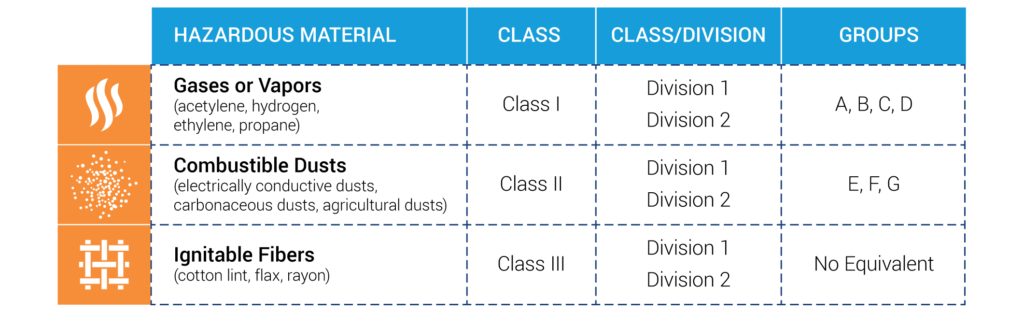
Hazardous Location Enclosures The Definitive Guide For 2018
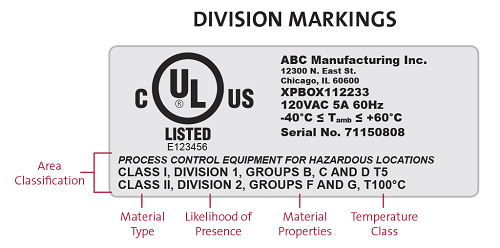
Ul And C Ul Hazardous Areas Certification For North America Ul
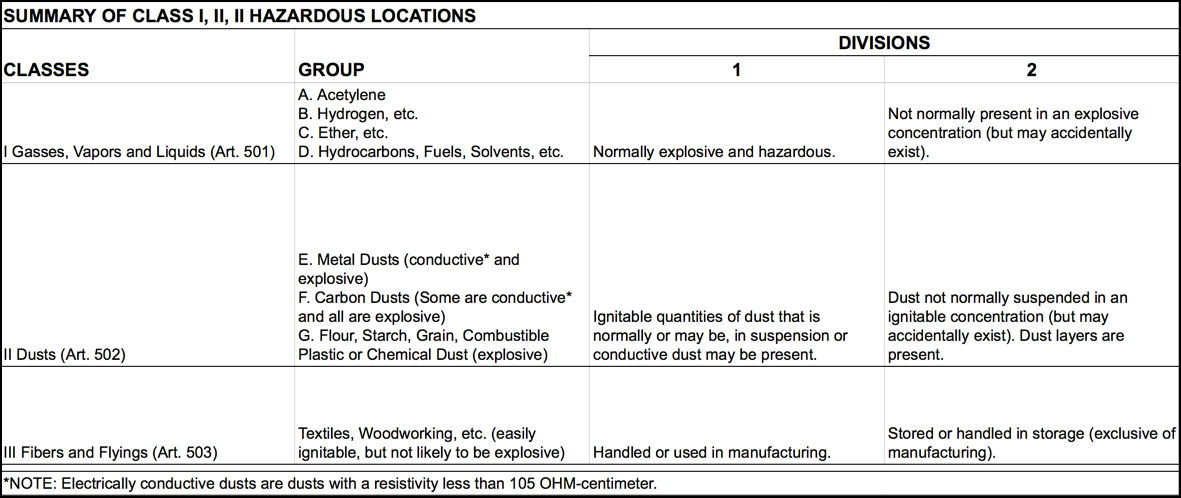
Hazardous Locations Groups Classes And Divisions Valveman Com

Oncetrip Com Weatherproofing Horns House Materials
Comparison Of Iec Nec Area Classifications Inst Tools

Explosion Proof Nema 4 Nema 4x Enclosures Class 1 Div 2 Enclosure Protection Nema Enclosures

Pin By Massoud Hassani On E I Zone 2 Classification Areas

Class I Hazardous Locations Ec M

Explosion Proof Equipment What To Use To Determine Hazardous Locations Classification Electrical Contractor Magazine
Hazardous Locations Guardian Telecom

Nec Article 502 Class Ii Hazardous Locations Ec M

5 Methods Of Protection Iaei Magazine
Hazardous Location Classification

5 Methods Of Protection Iaei Magazine
Hazardous Location Enclosures The Definitive Guide For 2018
The Role Of Hazardous Area Classification In Process Safety

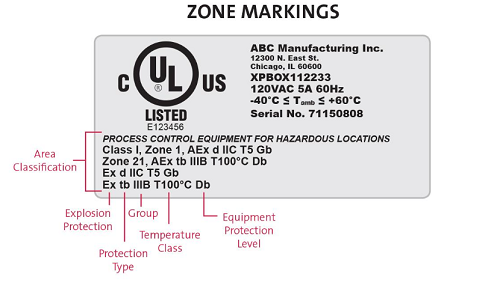
Ul And C Ul Hazardous Areas Certification For North America Ul

Overview Of Hazardous Areas Expo Technologies